Sanding boards
Floor sanding is a day of noise and a week of dust. Get the finish right and you might not do it again for twenty years.
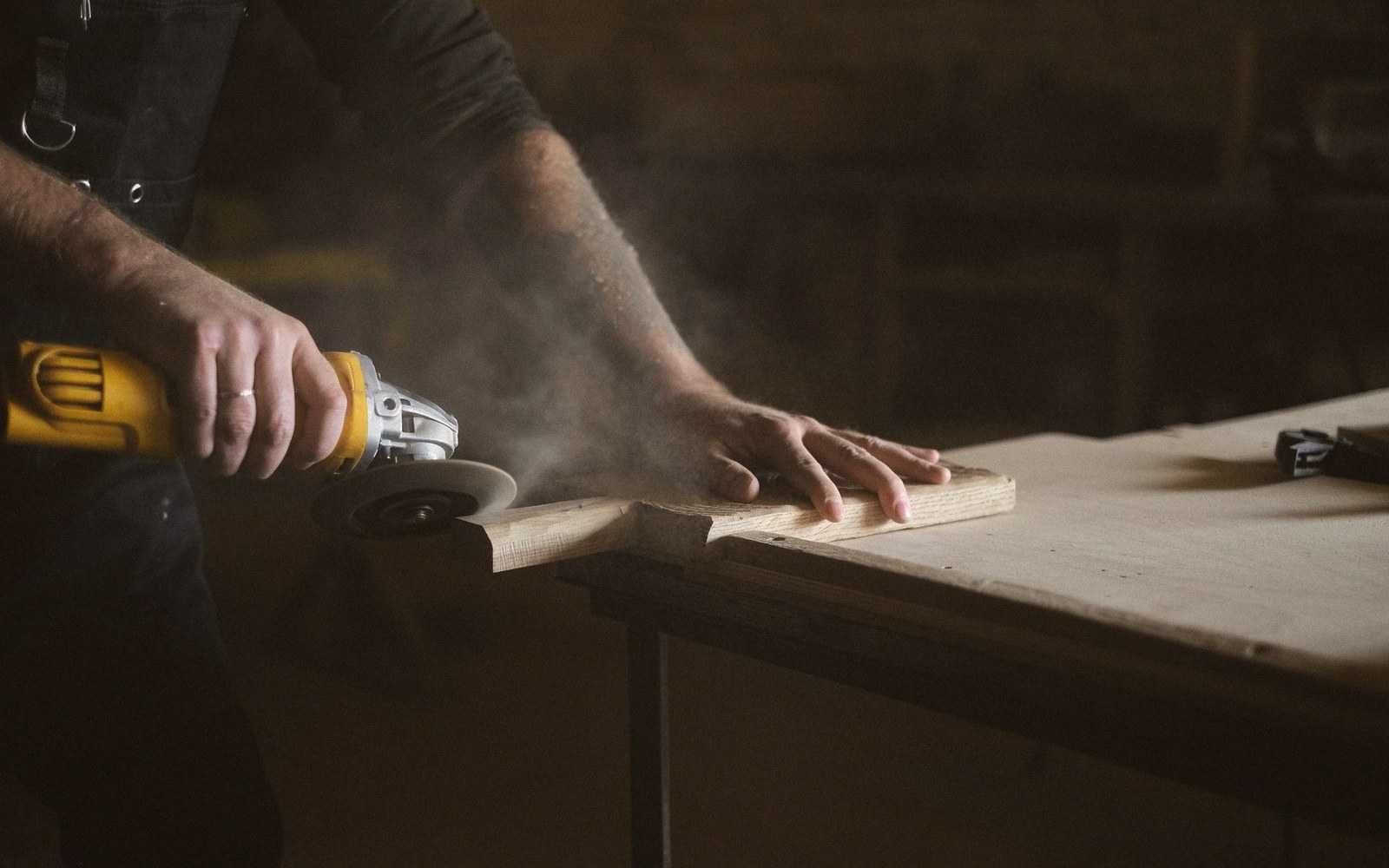
The work itself
Drum sanders — the upright machines hired from most tool-hire shops — remove material fast. That is the point and the danger. They must keep moving. Stop with the drum running and you cut a hollow that will take everything short of starting over to fix. Hire the drum sander for the body of the floor and an edge sander for the perimeter; neither reaches hard into corners, so add a detail sander or scraper for those last few inches. Before any machine goes on, knock all nail heads below the surface with a punch — a missed nail head tears abrasive paper and, if it's a staple, can snap back.
Hire the drum sander for the body of the floor and an edge sander for the perimeter;
Work diagonally across the grain first if the boards are cupped or uneven, then with the grain to finish. Grits move from coarse to fine: sixty or eighty to start, then a hundred or more to finish. Change paper before it glazes — blunt abrasive polishes the wood instead of cutting it, and polished wood takes finish unevenly. Dust extraction bags fill quickly; empty them, or suction drops and dust goes back down. Even so: seal internal doors, tape over keyholes, and accept that fine particles will travel further than seems physically reasonable. Take everything off the floor, and move anything you care about out of the room entirely.

The finish is the decision that lasts
A bare board is not a finished floor — it is a floor waiting to absorb whatever lands on it. The finish you choose controls how the wood looks, how it wears, and when you are back on your knees doing this again.
Oil finishes sink in rather than sitting on top. They give a flat, natural look, are easy to repair in patches without re-doing the whole floor, and need reapplying every few years. Hardwax oils behave similarly. Lacquers and varnishes form a surface film: harder, more water-resistant, more obviously coated-looking, and more of a job to repair because the whole surface shows any patch as a sheen change. Whatever you use, apply it only once the dust has fully settled — and sweep twice before you open any tin.

Check what's under the carpet before committing to a sander hire: cupped, stained or previously filled boards change how much material you'll need to remove, and sometimes change whether sanding is the right call at all.