Under the carpet
Lift a corner before you commit. What's down there is usually boards worth keeping — occasionally a reason to stop.

What you'll likely find
Carpet is pulled up for all sorts of reasons — a room restyle, a damaged edge, curiosity — and the discovery underneath can go either way. In most houses built before the mid-twentieth century, and a good proportion built after, the subfloor is timber boards: softwood planks running the length of the room, nailed across the joists. These boards were never meant to be the finished floor, but decades of being sealed away from light and foot traffic have often left them in better condition than the carpet that covered them.
The immediate checklist is simple. Look for evidence of water — dark staining that spreads from a wall or concentrates around a pipe route. Look for boards that flex underfoot or that have been lifted and replaced badly, sitting proud or sunk. Look for rot, which announces itself by feel as much as sight: timber that compresses when you push a penknife into it has lost its structure. Any of these warrant attention before you go further. Isolated damp staining, if old and dry now, may be historical and harmless; anything that feels soft or active is a different matter.

If the boards are sound — and they usually are — then you are looking at something genuinely worth having. Old-growth softwood, the tight-grained pine that went into Victorian and Edwardian terraces, is denser and harder than most timber sold today. It takes staining evenly, sands back well, and lasts. Sanding boards is the committed route: a floor sander deals with the field, a smaller edge sander handles the perimeter, and the dust is considerable. But the result is a floor that cost you labour and not much else, with a character no sheet vinyl duplicates.
Before you sand, the groundwork
Two things to sort before any sanding machine comes through the door. First, fasteners: boards nailed with cut nails, as most old ones are, should have every visible nail head punched below the surface. A drum sander tears through abrasive the moment it catches a proud nail head, and the cost of hire adds up quickly. Check every board, especially around the perimeter where boards were lifted for pipes or cables, and replace any loose board nails with screws — they hold better and won't creep back up.
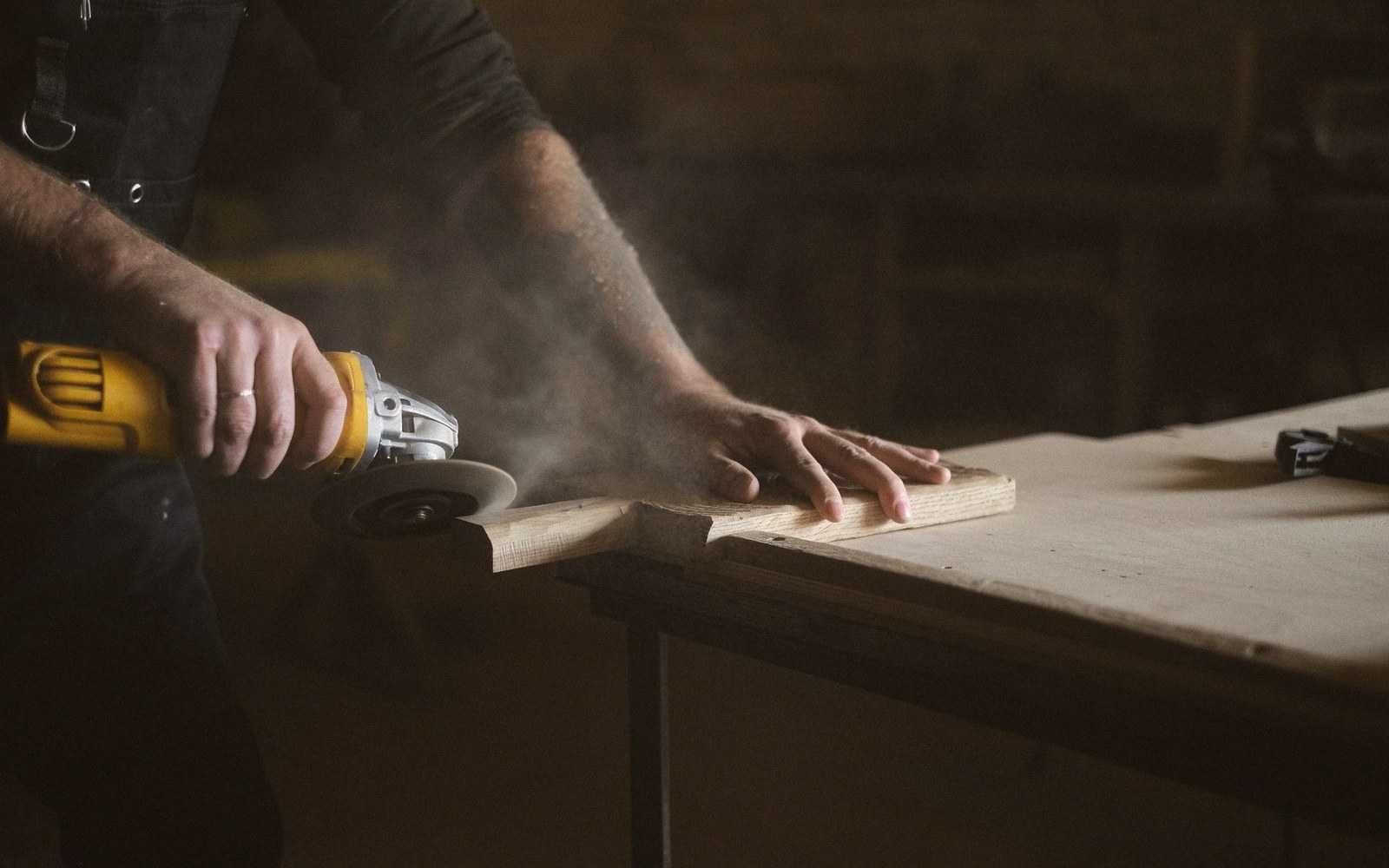
Second, the gaps. Boards shrink across their width over decades; the gaps between them are normal and, within reason, not a problem. Very wide gaps — anything you could post a coin through — are worth addressing before sanding, either by running a thin bead of flexible decorator's filler along the run, or for a more permanent job, by ripping thin softwood slivers and gluing them in. Fill proud, let it harden fully, then sand. The alternative is gaps that collect grit and shadow the finish.
Or a concrete screed that was poured when underfloor pipework was replumbed.
The finish itself matters as much as the sanding. Hardwax oil — a penetrating finish that soaks into the timber rather than building a surface film — handles the everyday movement of a timber floor better than a brittle lacquer, and individual areas can be treated without the whole floor needing to come back. A wax or oil finish also wears honestly: it dulls where it gets traffic and can be refreshed without stripping. A floor lacquer looks glossier straight from the tin but shows scratches white and requires full stripping when it finally gives up.
When the carpet was there for a reason
Occasionally you lift a corner and find why: boards that have been replaced piecemeal with whatever was to hand, leaving a patchwork of mismatched timber. Or a concrete screed that was poured when underfloor pipework was replumbed. Or boards that have suffered real damage. None of this is necessarily terminal, but it changes the calculation. Covering a problem floor decently is a legitimate decision — the mistake is making it without looking first.