A sticking door
The fix is almost always at the hinge. The door gets blamed last.
Where to start
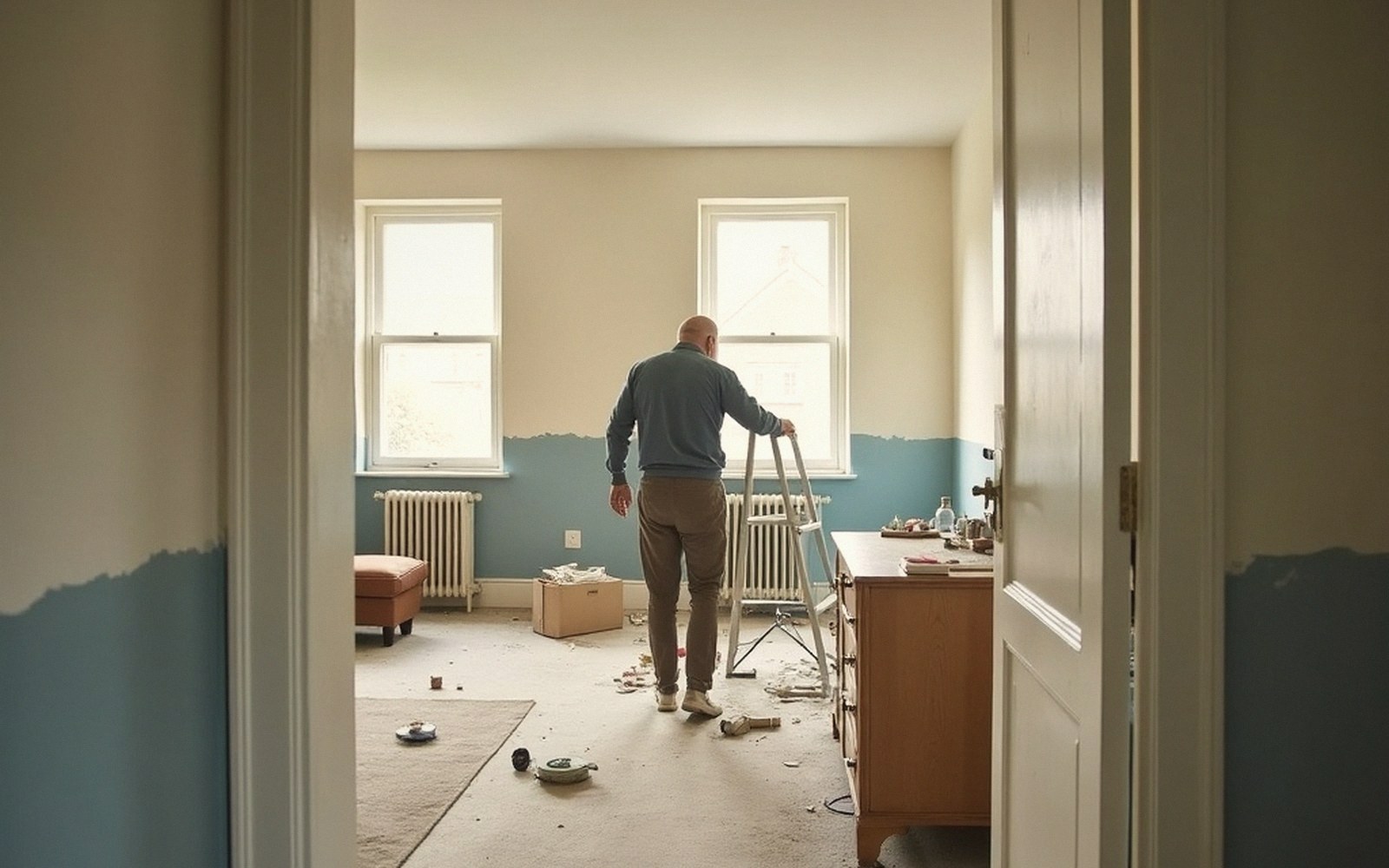
A door that sticks tells you where it's rubbing by leaving a mark — a scuff along the top edge, a drag at the latch side, bare wood where paint has been kissed off. Find that mark before you reach for a plane. Nine times out of ten, you won't need one.
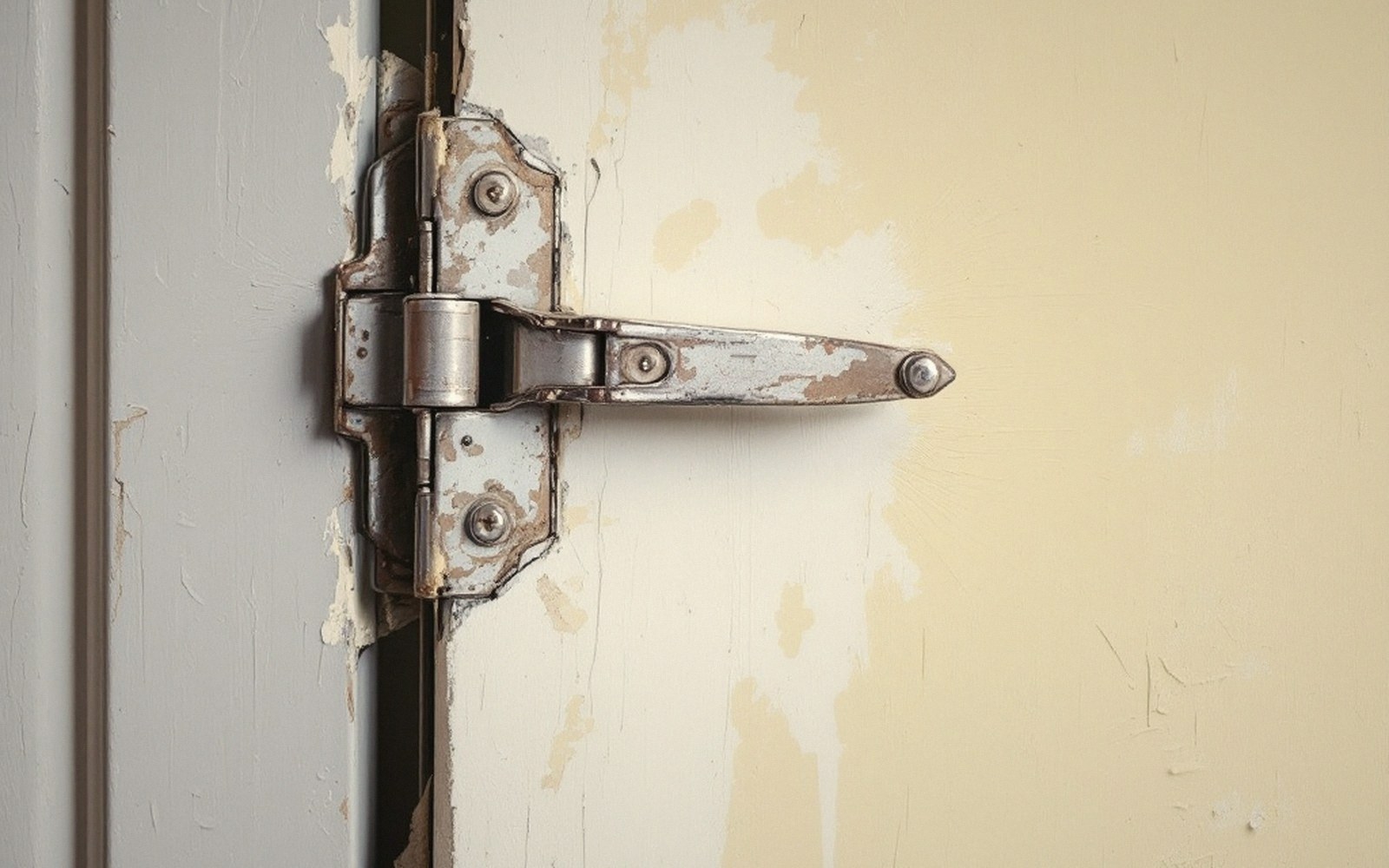
Check the hinges first. Open the door to ninety degrees and look at each one. A single loose screw can let the door drop several millimetres — enough to drag on the floor or bind against the frame at the top corner. Tighten every screw. If a screw spins without biting, the hole has worn out. Pack it: remove the screw, push a few wooden matchsticks or a whittled sliver of timber into the hole with a dab of wood glue, let it dry, then refit the screw. It will hold.

If tightening solves nothing, open the door and watch the hinge leaves. A hinge that's recessed too deep — mortised too far into the timber — pulls the door toward that side. Shim it out with a scrap of card cut to the shape of the recess, slipped in behind the hinge leaf before you refit the screws. A piece of cereal-box card is exactly right.
If it's not the hinges
A door that's tight all the way up one edge, or swollen across the full top, has usually taken on moisture — common after a wet winter or in a bathroom. Before you plane anything, wait. If the weather caused it, drier air may free it on its own over a few weeks. If it doesn't shift, mark the rub line clearly with a pencil while the door is in place, then remove the door from its hinges by tapping the hinge pins upward with a screwdriver and mallet.
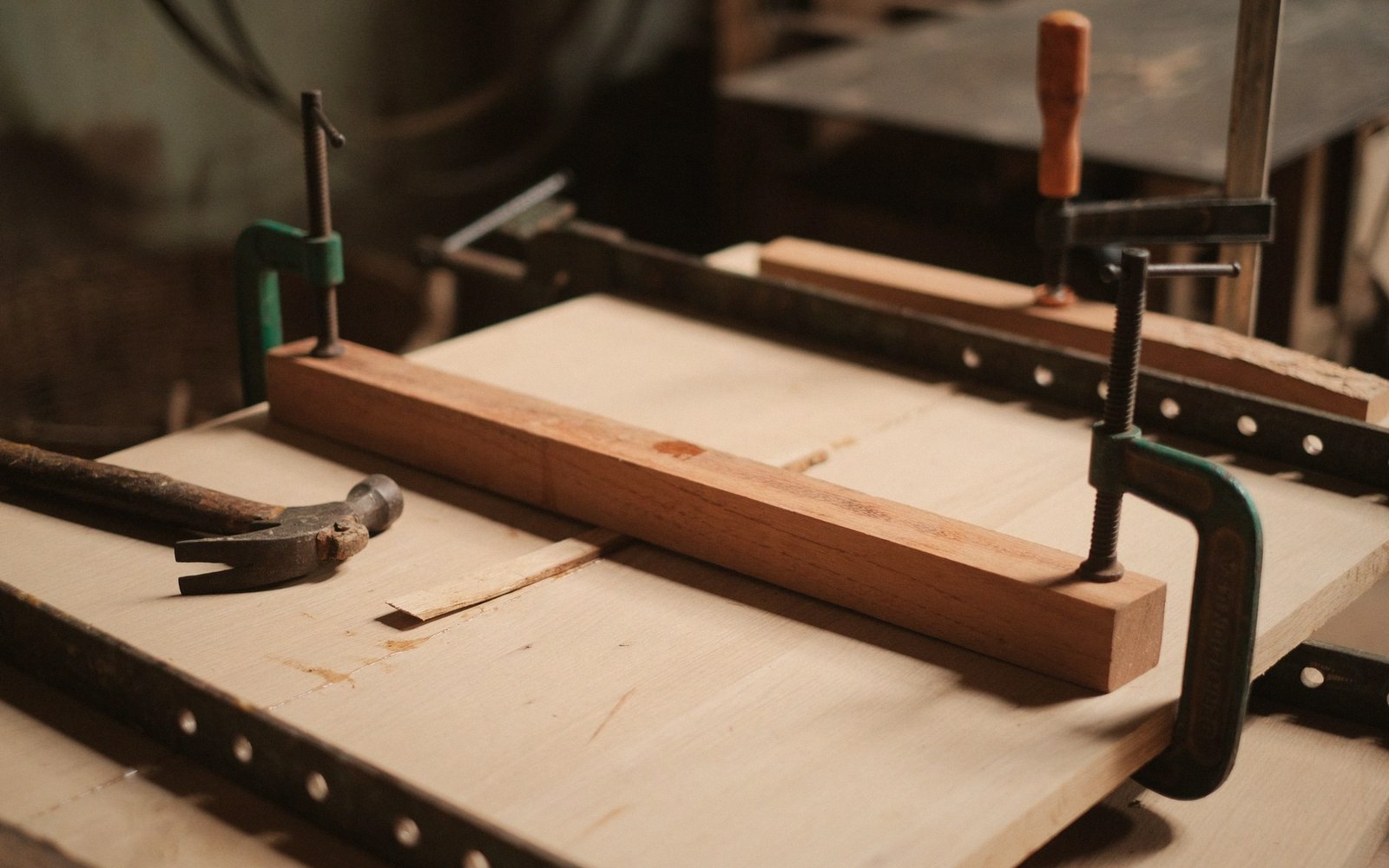
Plane to your line, working with the grain where you can, in short passes. Take less than you think you need. A planed edge should be sealed immediately — bare timber left exposed is what caused the swelling in the first place.
If the weather caused it, drier air may free it on its own over a few weeks.
Check the frame itself only if the door has been fine for years and nothing has changed with the door. Frames move when a house settles, and a frame that's racked out of square needs a closer look at whether anything structural has shifted — which is a job that goes beyond a weekend afternoon.