Three lamps, not one ceiling light
A single overhead source flattens everything under it. Fix that with a floor lamp, a table lamp, and a reading light — nothing hardwired.
Pools, not floods
A central ceiling light does one thing: it illuminates the room evenly from above, which is exactly what you don't want in the evening. Even illumination means no shadow, no depth, no sense of where to settle. It is the lighting equivalent of a hospital corridor, and it makes even a well-furnished room feel provisional.

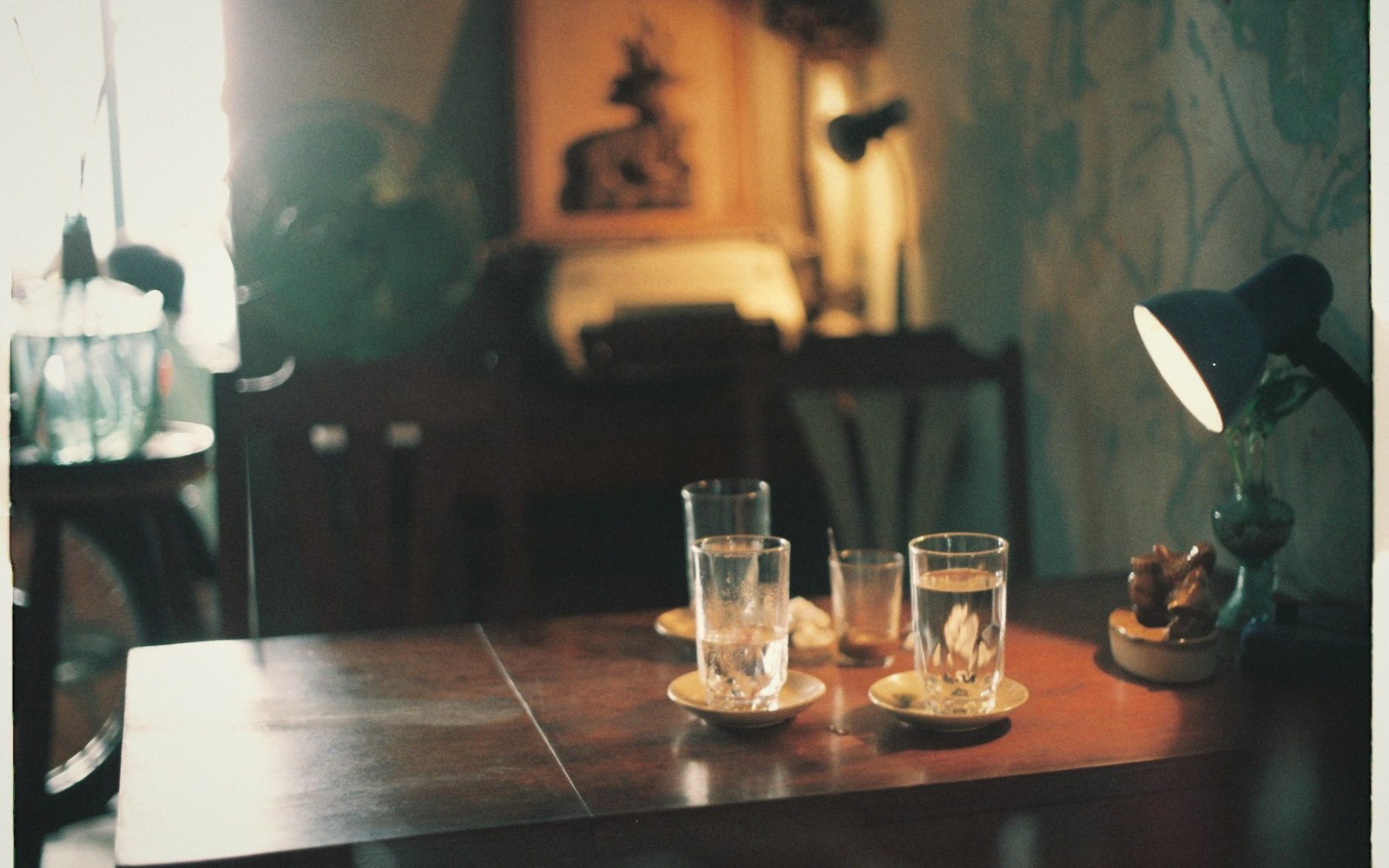
The alternative isn't clever circuitry or a rewire. It's three lamps plugged into ordinary sockets, positioned to create separate pools of light at different heights. A floor lamp in one corner, a table lamp near a sofa or chair, and a focused reading light close to wherever someone actually sits. None of these require anything beyond a socket and the decision to stop relying on the overhead fitting.
Height matters more than brightness. A lamp at floor or table level throws light sideways and upward, grazing the wall and catching texture — the grain of plaster, the edge of a shelf. Where the light actually falls in a room is largely a question of height, and low beats high almost every time in a living space. If your walls have any texture worth seeing, a lamp beside them will show it; a ceiling fitting directly overhead will not.
Keep the wattage modest and the shade opaque or semi-opaque rather than open at the top. A shade that throws all its light downward gives you a defined pool. One that throws light in every direction gives you a smaller version of the ceiling light problem — diffuse, directionless, flat.

Position is a question of where people actually are. The floor lamp goes in the corner that currently feels dead and dark. The table lamp goes on a surface beside the seat that gets used most — a side table, a bookshelf at the right height, a stool pressed into service. The reading light clips or stands close to the shoulder, angled at the page or screen, keeping light where the eye is and leaving the rest of the room to sit comfortably in half-dark.
If your walls have any texture worth seeing, a lamp beside them will show it;
Turn the ceiling light off and leave it off for a week. Most people find they stop missing it entirely, and the room gains a quality it didn't have — a sense that the light belongs to specific places rather than falling indiscriminately on everything. The overhead fitting can stay; it's useful when you're cleaning or looking for something small on the floor. But three lamps, positioned around actual use, will change the room more durably than any other single adjustment that costs nothing to install.