Tiles and grout
The grout is the maintenance. The tile is just the background.
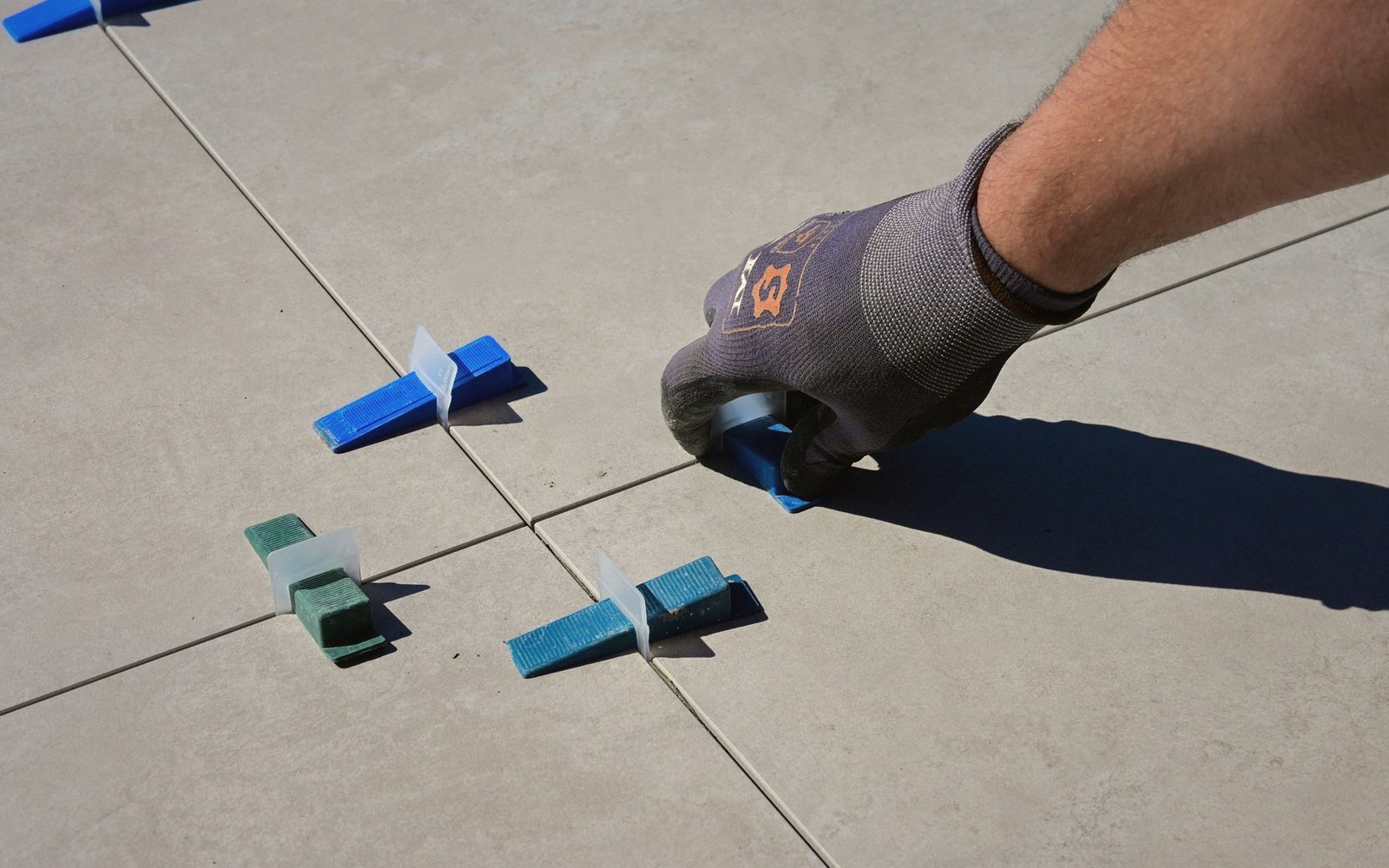
The grout fails first
A ceramic or porcelain tile is, in any practical sense, indestructible. Drop something heavy on it from height and the tile may crack, but short of that, it will outlast you. The grout between the tiles will not. It is porous, it shrinks over time as it cures and re-cures through heat cycles, and in a wet environment — a shower, a splashback, the floor around a bath — it picks up mould faster than almost any other surface in the house.
The right response to grey, cracked or crumbling grout is not retiling. It is regrouting, which is an afternoon's job with a handful of tools: a grout rake (a narrow, hardened blade on a handle), replacement grout mixed to the consistency of peanut butter, a rubber-faced float to press it in, and a sponge. Rake the old grout out to a depth of roughly two millimetres — enough that the new grout has something to grip. Work in sections, press the new grout in on the diagonal so it packs the joint fully, then wipe back with a barely damp sponge before it skins over. Leave it twenty-four hours before any moisture gets near it.
Colour matters more than people expect. Pale grout in a kitchen or bathroom looks clean for about a fortnight, then shows every mark. Mid-grey or charcoal is forgiving, hides soap residue, and makes the tiles read more clearly rather than less. If the existing grout is merely stained — not cracked, not crumbling — a dedicated grout cleaner and a stiff brush will sometimes recover it entirely before you commit to raking anything out.
The one joint that is not grout is the movement joint: the silicone bead where tiles meet a bath rim, a basin, or an inside corner. Grout there will crack because the surfaces move relative to each other. Silicone that has blackened or lifted needs removing and replacing, not painting over or pushing back in. That is a separate job, but a short one, and it matters: a failed movement joint is how water gets behind the tiles, and behind the tiles is where the real damage begins.