What a worktop has to take
Heat, water, knives and time. Every material fails at one of them.
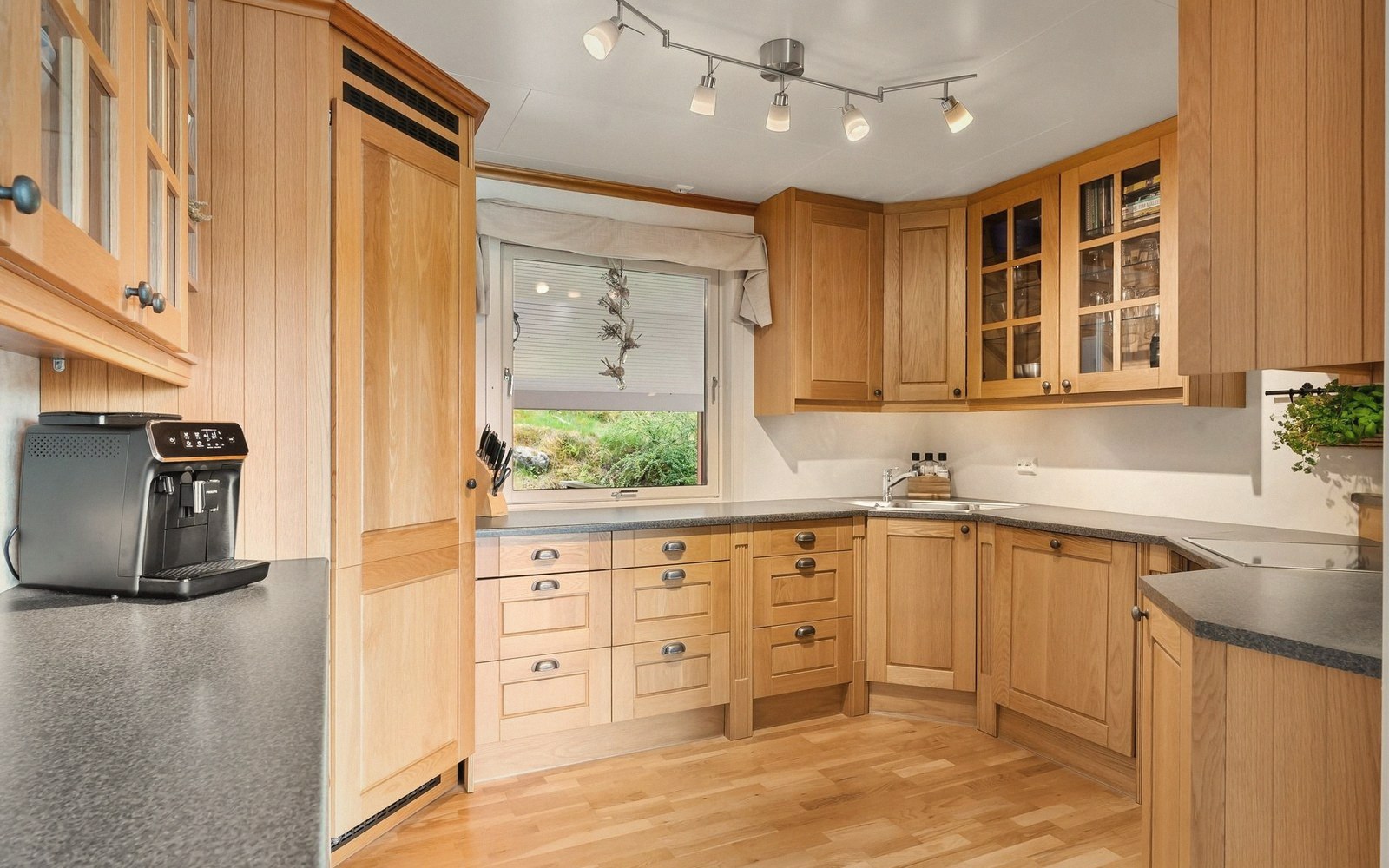
A worktop is not furniture. It does not get to live quietly in a corner — it absorbs everything: hot pans, wet cloths, dragged chopping boards, the glass that sits in its own condensation ring for forty minutes while someone forgets about it. Understanding what a surface cannot take is more useful than knowing what it can, because that is what tells you whether a repair is worth attempting or whether you are simply postponing the same conversation.
What the surface is actually doing
Stone and engineered stone — quartz composite being the dominant form in the last two decades — are hard, dense and almost indifferent to heat in any domestic sense. A hot pan will not usually scorch natural stone, though the resin in quartz can mark or discolour under direct heat. But they are not indestructible: a heavy dropped implement at the right angle will chip a corner, and once chipped, the edge is sharp and the damage is structural. Quartz is also more vulnerable to prolonged UV exposure than solid granite, which matters on a south-facing windowsill more than a kitchen bench, but is worth knowing.
Timber — solid hardwood, end-grain or long-grain — is the surface people worry about most and should worry about least, with the right habits. It is the only worktop material that can be sanded back and re-oiled when it looks tired, which means it is also the only one that is genuinely repairable at home. Water is its actual enemy, and always from below: the join at the sink cutout, a gap at the upstand, a crack in the finish that sits unaddressed. The surface itself handles wet briefly and dry heat well; prolonged submersion or a pot boiling over and sitting while you answer the door is another matter.
Laminate — the chipboard core with a printed and fused surface layer — is the majority of what exists in ordinary houses built and fitted from the 1960s onwards. It is tolerant of a great deal and genuinely easy to clean, but it fails in two ways that cannot be reversed. A knife dragged across it scores it permanently, and the score traps moisture, which reaches the chipboard and causes swelling that no surface treatment will fix. Heat leaves circular burns that go right through the print layer. Neither can be sanded out. A laminate worktop is not repairable; it is replaceable.
Solid surface — the acrylic-based material sold under various trade formulations since the 1970s — occupies a middle ground. Scratches are real but shallow, and a fine abrasive will reduce them noticeably. It is seamless when fitted well and handles water without the laminate's structural anxiety. Heat is its limit: the material softens under sustained high temperature, and a pan left on it will leave a mark that is not fully reversible, only partially reduced.
Scratches are real but shallow, and a fine abrasive will reduce them noticeably.
Concrete, poured or precast, has had its moment of fashion and earns its place honestly. It is heavy, it must be sealed, and the sealant is what you are actually living on. When the sealant breaks down — around the sink, on a busy prep area — the concrete stains readily from acids (citrus juice, wine, vinegar) and does not recover. Resealing is the maintenance task; it is not complicated, but it must be done before the surface is compromised, not after.
The repair question
For any worktop, the question is the same: has the surface layer been breached, and has moisture reached the substrate? For stone, this rarely applies; for timber, it is the central anxiety; for laminate, it is usually the end of the road. A burn or score on laminate that you can catch your fingernail in has almost certainly reached the board beneath. An oil finish on timber that is visibly dry and beginning to grey has not yet failed — it is asking to be re-oiled, which takes an afternoon and a tin. The difference between early maintenance and late repair is usually several years and a significant amount of effort. Treat the surface when it tells you, not when it stops functioning.