Mismatched on purpose
A room of one set reads like a showroom. The fix is deliberate inconsistency, not accident.

The problem with the suite
Walk into a room where every piece came from the same range — matching handles, matching leg profile, matching wood tone — and something feels wrong before you can say why. Showroom, or staging for a sale. The eye clocks the repetition and stops looking. Real rooms accumulate over time; that accumulation is what makes them feel inhabited.
The cure is not chaos. A room full of randomly sourced pieces with nothing in common is just as hard to be in. What works is selective mismatch: one or two elements that deliberately break the pattern, chosen with enough care that the break looks intentional.

What to match, and what to let go
The practical rule is: agree on one thing, disagree on everything else. That one thing could be leg style — all tapered, or all turned, or all straight square legs — and suddenly pieces from different eras and different woods start to belong together. Or the common thread is height: every seat at the same level, every surface within fifty millimetres of each other, so the room reads as settled even though nothing matches.
Colour does the same work. A chair reupholstered in the same fabric as the curtains earns its place regardless of what the frame looks like. A coat of paint in a single colour — something dark, on two different side tables of different shapes — unifies them without making them twins. Second-hand furniture often has mismatched origins; the same paint finish is one of the quickest ways to make a room feel like someone chose it.
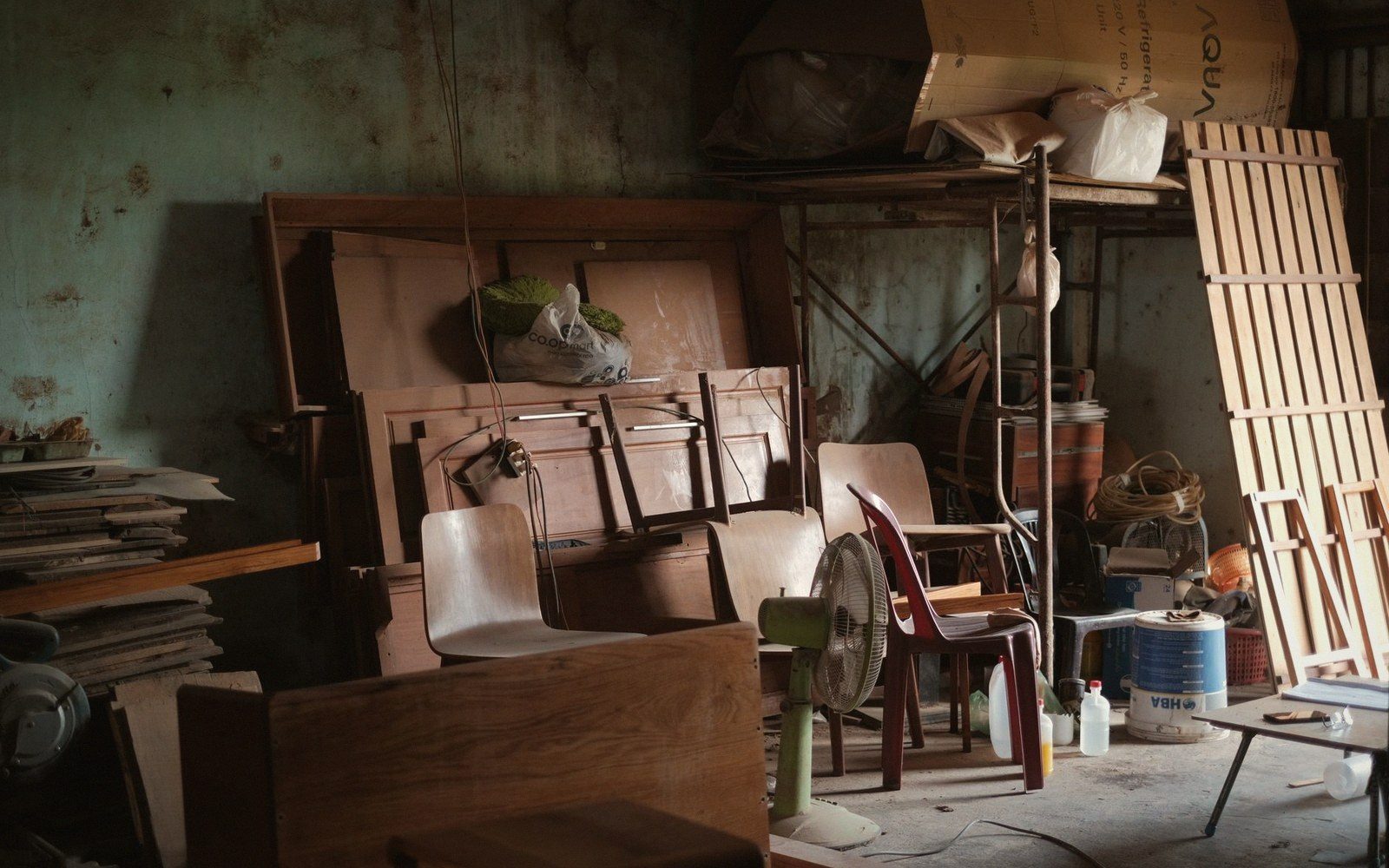
What you can let go: wood tone, style, period, size. A Victorian button-back next to a 1960s low-framed sofa can work if they share a colour or a leg. The period difference becomes the point.
A room full of randomly sourced pieces with nothing in common is just as hard to be in.
The piece that breaks the set
In a room that already has some coherence, one anomalous piece — a stool of a different material, a table whose proportions are slightly off — is the thing visitors actually look at. It gives the eye somewhere to land. If every piece is politely matching, there is nothing to see.
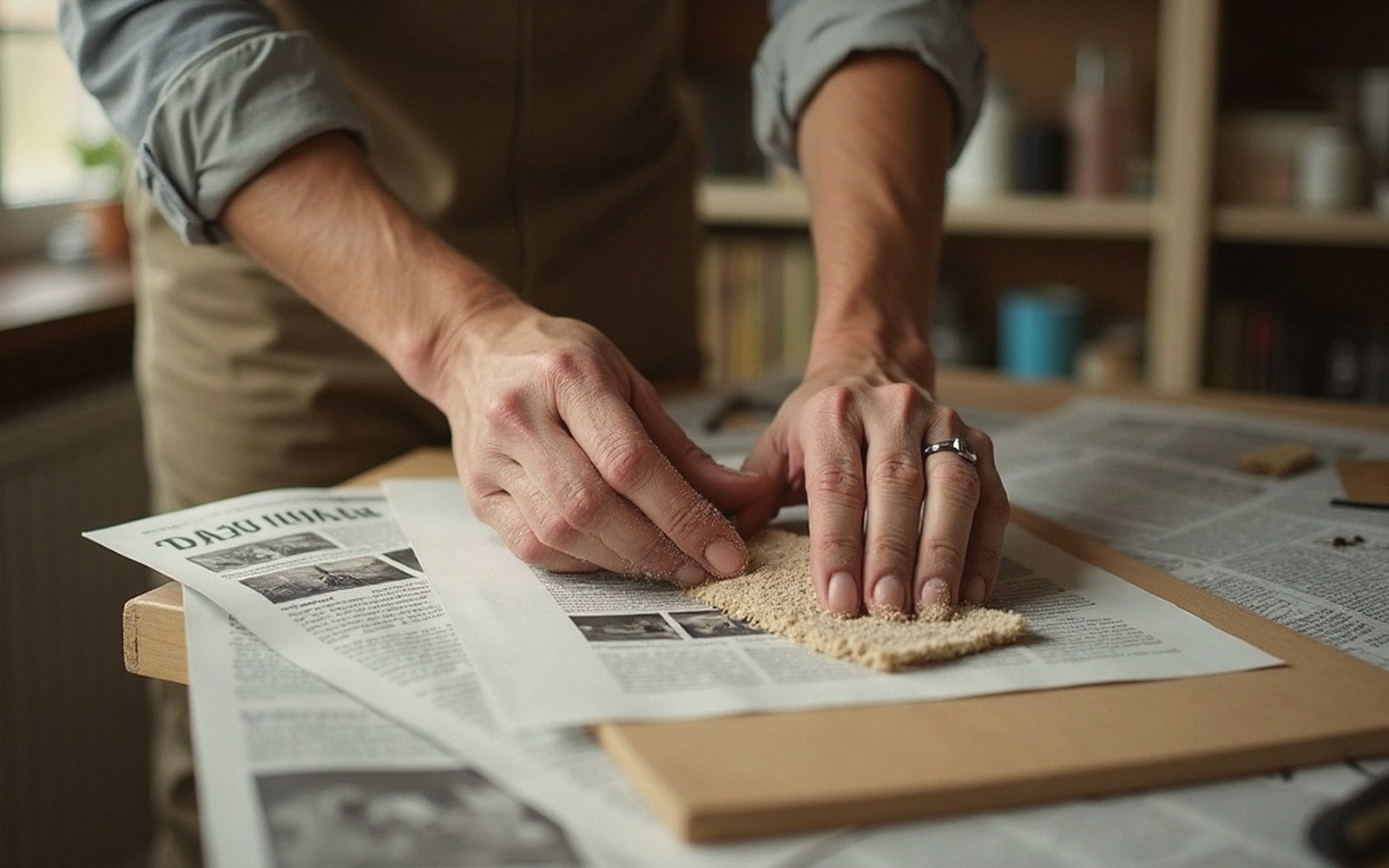
This is worth keeping in mind at the market or the auction house. You are not looking for the piece that goes with everything else. You are looking for the piece that goes with one thing in the room and argues, pleasantly, with the rest. That is a harder brief than matching, and it makes a better room.